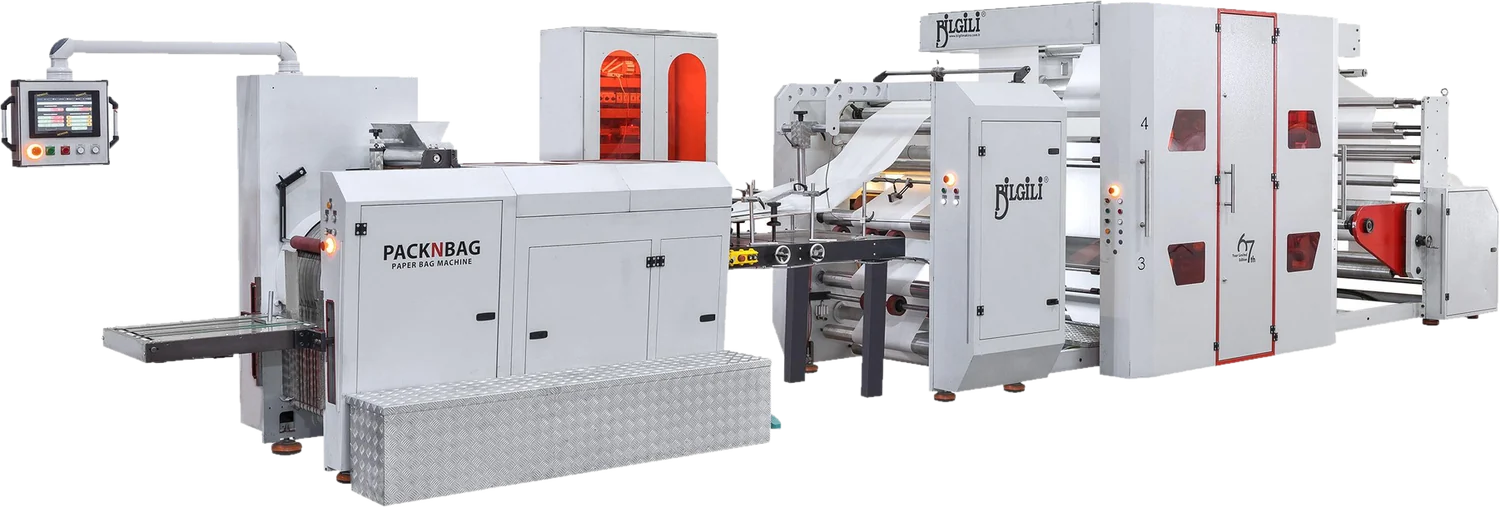
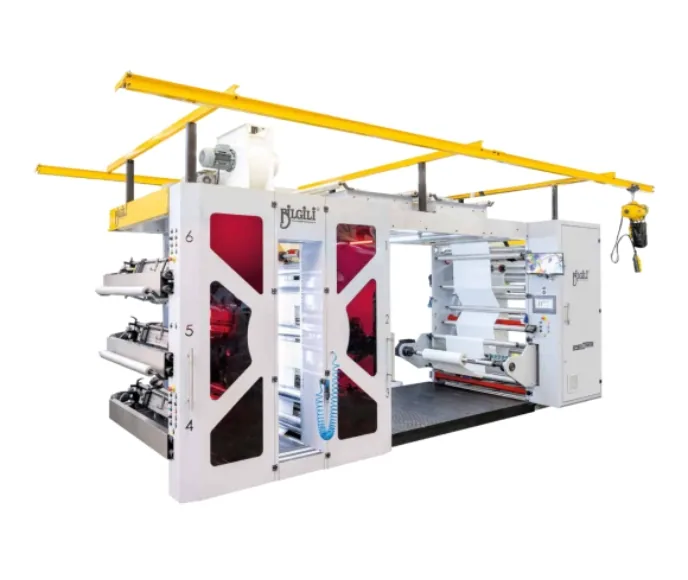
Flexo printing (flexography) is a method of printing at high speed on material in reel form using a flexible printing plate. The ink is metered onto the plate by a cell-covered roller called an anilox, and passes from the plate to the material. Because it can print on very different surfaces such as plastic film, paper, woven sacks and non-woven, it is one of the most widely used methods in packaging printing.
How does flexo printing work?
In a flexo printing unit, four main parts work together:
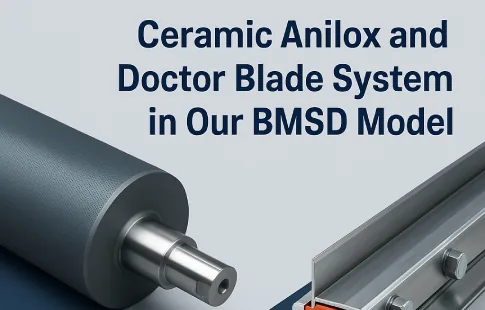
- Ink chamber and Dr. Blade: Ink is fed to the anilox roller; the Dr. Blade (doctor blade) wipes the excess ink off the surface of the roller, so that ink remains only inside the cells.
- Anilox roller: Its surface is covered with microscopic cells. The volume and density of the cells determine how much ink is carried to the printing plate.
- Printing plate: The flexible plate wrapped around the plate cylinder. The areas to be printed stand up in relief; only these raised areas touch the anilox and pick up the ink.
- Impression roller: Presses the material lightly against the printing plate, and the ink transfers to the material.
There is a separate unit for each colour. The material passes through the units in turn, the colours sit on top of one another, and the drying sections in between dry the ink before the next colour. When printing is finished, the material is rewound as a reel.
Which materials can be flexo printed?
Because the printing plate is flexible and the printing pressure is kept low, flexo runs without trouble on thin, stretchy materials too. Our machines print on OPP, CPP, BOPP, LDPE and PP films, kraft and sulphite paper, PP woven sacks and non-woven fabric. Bags, food packaging, paper bags, sacks and labels are the best-known products of this method.
What are the advantages of flexo printing?
- Speed: It runs reel to reel without interruption. The mechanical speed of our BMS-D series is 350 metres per minute.
- Range of materials: The same machine can print on both plastic film and paper.
- Low unit cost: On long-run jobs the cost of the printing plates is recovered quickly.
- Fast-drying inks: The ink dries between the units; the printed material can be rewound or processed straight away.
What is the difference between flexo printing, offset and rotogravure?
Offset printing works with a flat plate and mostly on sheet-fed paper; it is strong in book, brochure and carton box printing. In rotogravure the image is engraved into a metal cylinder; because cylinder cost is high, it is preferred for very long runs. Flexo, thanks to its flexible plate, is a method with lower plate cost and faster job changeovers, and offers an economical solution for medium and long runs in flexible packaging.
What should you look for when choosing a flexo printing machine?
- Number of colours: 2, 3, 4, 6 or 8 colours, depending on the design of the job.
- Print width: Chosen according to the width of the reel to be printed; our machines are built from 800 mm up to 1600 mm.
- Ink system: Dr. Blade and ceramic anilox improve colour consistency and extend roller life.
- Control systems: Camera, edge control and tension control reduce waste.
Bilgili Makina built Turkey's first flexo printing machine in 1958 and still designs and manufactures its machines in Istanbul today. You can explore the options on our flexo printing machines page and request a quotation for the configuration that suits your work.